By Paul Windsor · Carpet overlocking specialist, Sunnynook workshop
What Is Over-Locking?
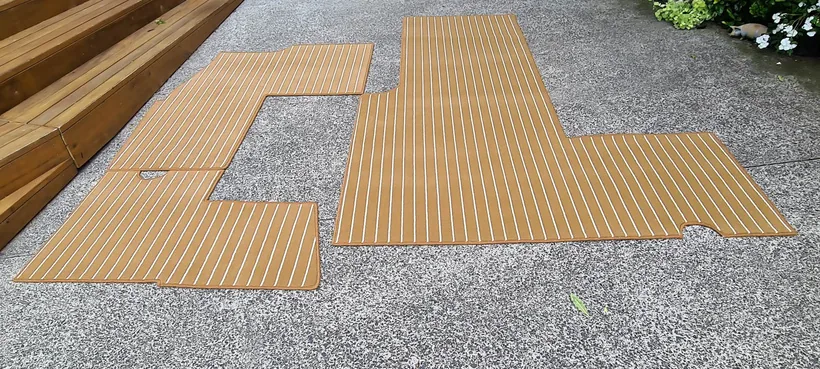
Carpet overlocking is the finish that turns a cut piece of carpet into a proper rug or mat. Instead of leaving a raw edge that sheds and unravels, a specialised machine wraps strong yarn tightly around the perimeter so the pile and backing stay locked together. That border is what makes custom runners, caravan mats and boat carpets last in real use.
I explain it to customers the same way every week: the overlocked edge is what stops a good offcut from becoming a mess of frayed fibres by the door. This guide covers what overlocking is, how the common names relate, when you need it, and what it is not — before you decide on yarn colour or book a workshop job.
What is overlocking?
Overlocking (also called serging in many carpet shops) is a machine process that wraps yarn continuously around the cut edge of a carpet or rug. The stitch encases the raw perimeter so tufts cannot walk out of the backing and the cut face is hidden under a neat, even border.
Professional equipment is built for carpet thickness. The machine feeds the edge under a sewing head that loops yarn around the pile and backing with consistent tension. Done well, the result looks intentional: a finished border that belongs on the piece, not a rough cut-off from a roll.
Overlocking does not change the carpet in the middle of the mat. It protects the vulnerable edge — the place where foot traffic, vacuum heads, door sills and movement do the most damage first.
Serging, binding and edging — what people mean
Customers often use serging, binding, edging and overlocking as if they were the same word. In everyday conversation that is fine; the goal is always a secure, finished perimeter. In the trade the shades of meaning are useful:
- Overlocking / serging — yarn wrapped around the edge by an industrial carpet machine. This is the finish most people want for custom rugs and mats.
- Binding — sometimes means a wider tape or fabric strip stitched over the edge. Some shops use “binding” loosely for any edge finish.
- Edging — a general term for any reinforced border, including overlocked yarn or tape.
At the Sunnynook workshop, when someone asks for overlocking or serging, they almost always mean a machine yarn wrap on a cut carpet edge. If a wider tape finish is more suitable for a particular piece, that is a separate conversation — not something you get by default from a domestic sewing machine.
Why cut carpet edges fail
Carpet is engineered to sit in a continuous floor covering. Once you cut it to size, you expose the tufts and the backing structure along that line. Without a mechanical wrap, fibres loosen, the cut face looks unfinished, and everyday use speeds the damage:
- Foot traffic rolls and abrades the free edge
- Vacuum cleaners catch and pull at loose tufts
- Washing, damp and grit work into an open edge faster than into a wrapped one
- In caravans and boats, mats flex and shift, so an unbound edge frays even sooner
I see the same pattern with lounge remnants cut into hallway runners: the middle of the carpet can still look fine while the corners and long sides start to “fur” within months if they were never finished.
When you need overlocking
You need a proper edge finish whenever carpet has been cut to a custom size or shape and will be used as a free mat or rug rather than wall-to-wall installation. Typical jobs include:
- Home rugs and runners cut from remnants or full rolls for hallways, kitchens and living spaces
- Caravan and camper mats shaped to steps, aisles and curved corners
- Boat and yacht carpets templated to cabins and cockpits
- Doormats, entrance mats and other high-wear pieces where a raw cut would look unfinished and fail early
If the piece already has a factory finish that is intact, overlocking may not be necessary. If edges are already fraying, re-finishing the perimeter can extend the life of an otherwise sound mat — provided the pile and backing are still worth keeping.
What overlocking is not
Clearing up a few common misunderstandings saves people time and ruined carpet:
- Not a domestic sewing job. Home machines are not built for dense pile and stiff backing. Tension wanders, needles break, and the stitch rarely holds under foot traffic.
- Not the same as sticky tape or temporary wrap. Temporary edge products can look tidy for a short time; they are not a substitute for a machine yarn wrap on a working mat.
- Not a repair for worn-out carpet. Overlocking protects the edge. It does not restore crushed pile, rotten backing or carpet that has already reached the end of its life in the middle.
- Not “just for looks.” Appearance matters, but the structural reason for overlocking is to stop the edge coming apart.
Choosing yarn: match or contrast
Yarn colour is part of the finish, not an afterthought. A close match makes the border disappear into the carpet for a subtle result. A contrasting colour frames the mat and can suit patterned pieces or bold interiors. Weight of yarn is chosen to suit the carpet thickness so the wrap sits firmly without looking sparse or bulky.
When you bring a piece into the shop, we look at the carpet under workshop light and pick from stock colours together. Dimensions and corner shapes are confirmed at the same time so the finished mat matches how you will use it at home, in a caravan or on a boat.
Common myths
Myth: “If I cut carefully, I do not need a finish.” A clean cut still leaves an open edge. Careful cutting helps the stitch look even; it does not replace the stitch.
Myth: “Any sewing shop can do carpet overlocking.” Carpet overlocking needs industrial equipment and settings for pile height and backing. General alterations work is a different craft.
Myth: “Overlocking only matters for expensive carpet.” Cheap remnants fray too — often faster. The finish is what makes a remnant usable as a rug.
Myth: “Once it is bound, I can treat the edge as indestructible.” A good wrap is tough, but harsh cleaners, trapped grit and damaged stitching still need sensible care.
Next steps
If you now know you need a finished edge, the next useful reads are how the workshop process works and the practical benefits of overlocking compared with leaving edges raw or buying a new sized carpet. When you are ready for a quote, contact Paul at the Sunnynook workshop — bring the carpet if you can, or photos and measurements to start the conversation.